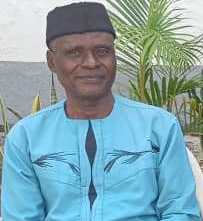
Stubborn firmness, irrepressibility, and the courage to resist the overreach of those in authority have defined Atiku’s political life to this day. The Wazirin Adamawa, Nigeria’s political generalissimo, will not be caged—not by Obasanjo, and certainly not by Tinubu.
From the time he voluntarily retired from the Nigerian Customs Service in April 1989 and joined politics at the invitation of the then retired second-in-command and deputy head of the General Obasanjo-led military government of 1976-1979, General Shehu Musa Yar’Adua—a man with a keen sense of discovering political talent—Atiku Abubakar has faced vicious persecution while navigating the Nigerian political terrain.
During the build-up to the Third Republic, Atiku contested and won the Adamawa State SDP governorship primaries of November 1991, but then was disqualified by the military government from contesting in the governorship elections proper. His dual sins were his past uncompromising stance against the impunity and overreach of the military rulers, such as the infamous 56 suit cases controversy of 1984, which involved the Emir of Gwandu, the father of Major Jokolo, who at that time, was the ‘Aide the Camp’ (ADC) to the military head of state, Major-General Mohammadu Buhari, and for being a protégé of the archenemy of the military rulers, General Shehu Yar’Adua, the man who was relentlessly stampeding the military rulers to cede power and to return the country to democratic governance.
Following the last-minute banning of his mentor, General Yar’Adua, from contesting in the 1993 presidential elections by the Ibrahim Babangida-led junta, Yar’Adua and his Peoples Front (PF) allies in the SDP hurriedly nominated and drafted Atiku Abubakar to be Yar’Adua’s replacement in the 1993 SDP presidential primaries that were held in Jos—a contest that pitched Atiku against billionaire businessman Moshood Abiola and Baba Gana Kingibe, the preferred candidate of the military rulers. At the end of the first ballot, Abiola garnered 3,617 votes, Kingibe scored 3,255 votes, and Atiku got 2,066 votes. Then, following a deal in which Abiola agreed to name him as his running mate and vice-presidential candidate, Atiku supported Abiola to win the contest in the second round—to the chagrin of the military rulers, who then leaned heavily on Abiola to drop Atiku for Kingibe or risk their displeasure—and the consequential price of drawing the ire of the junta. Reluctantly, and under great duress, Abiola complied.
When the General Sani Abacha-led military junta that shoved aside the Ernest Shonekon-led transitional government began maneuvering to truncate the nascent transition to democracy program, Shehu Yar’adua, Atiku Abubakar, and their PF/SDP associates formed the Peoples Democratic Movement (PDM) and mounted the fierce pressure that forced the General Sani Abacha-led military junta to resume the program to return the country to civilian-led democratic governance. For their persistent ultimatums to the Abacha junta, while Atiku was forced to flee the country into exile to save his life, Yar’Adua was arrested, incarcerated, and extrajudicially executed by lethal injection in his prison cell.
In the early years of the Third Republic, Atiku Abubakar, then vice president, faced a spirited attempt by President Olusegun Obasanjo to amend the constitution to allow him to run for a third term. This issue, which is the defining controversy of the Obasanjo presidency, was not just the straw that broke the camel’s back and ruptured the erstwhile, very cordial relationship between Obasanjo and his deputy, Atiku; it also became a ‘life and death’ struggle by Atiku to resist the creeping dictatorship, preserve the constitution, and safeguard the country’s democracy.
As is well known, Atiku’s principled opposition to the ‘third term’ gambit led to a bitter political standoff that split both the PDP and the presidency, pitching the president, Obasanjo, head-on against his deputy, Atiku. The result was Atiku’s technical expulsion (deregistration) from the PDP, and Obasanjo’s very public avowal to ensure that Atiku would not succeed him as president, famously declaring that “I may not know who would be president after me, but I know who would not be—Atiku.”
Obasanjo’s threats were not only declarative, but he also made Atiku pay a steep price for his stubborn intransigence, including an extensive smear campaign launched against him by Obasanjo and his presidential aides, in which Atiku was accused—without a shred of evidence—of all shades of ethical malfeasance and vindictive plots to cripple and destroy all and every business linked to him.
Furthermore, though de-registered and forced out of the PDP, Atiku was undeterred. He was able to maneuver his way to contest the 2007 presidential election under the banner of the Action Congress of Nigeria (ACN) party. It was a futile bid which pitched Atiku directly against an embittered President Obasanjo, who ensured that the professor Maurice Iwu led, ‘pliant-as-butter’ electoral umpire, the Independent National Electoral Commission (INEC), refused to include Atiku’s name among the official list of candidates registered for the election, citing a puerile argument that Atiku’s omission was because of his being indicted for corruption by a government panel– a claim that placed doubts on the electorate of Atiku’s eligibility to contest the election, and derailed his campaign activities. Though Atiku challenged INEC’s position in court, it was not until 16th of April 2007 that his purported disqualification was overturned – when the Supreme Court unanimously ruled that INEC lacked the power to disqualify candidates vying for elections. But with the court ruling coming just days before the 21 April date of the presidential election, Atiku and the ACN’s campaign, short on time, could do little to change the foreclosed outcome of the election.
As the third republic marches on, we are witnessing yet another epic political thriller: the Bola Tinubu Vs Atiku Abubakar show. It premiered when Atiku convened the political coalition that adopted the African Democratic Congress (ADC) as the vehicle to challenge the ruling APC in the 2027 general election. Since then, the Tinubu-led presidency, reading pages from the Obasanjo playbook of political gamesmanship, has ‘pocketed’ INEC, weaponized the courts, and deployed an army of paid pawns to wage a relentless ‘take-no-prisoner’ lawfare against the ADC – with the intention to ‘cage’ the party, and in that, derail Atiku’s 2027 presidential bid.
The plots of the scenes of the epic that have played out include:
- The Dumebi Kachikwu’s legal challenge of the Atiku-led coalition’s adoption of the ADC – defeated
- The Hon. Leke Abejide’s legal challenge to the coalition’s David Mark-led ADC – defeated
- INEC’s deregistration of the David Mark and Rauf Aregbesola-led ADC – defeated
- The legal attempt by factional state chairmen of the ADC to take control of the party following INEC’s deregistration bid – defeated. And now,
- The ongoing battle for control of the ADC, following the November 5 ruling that favors Nafiu Bala Gombe’s curious claim, despite documented evidence of his earlier resignation, of being the rightful chairman of the ADC – a controversial judgment procured from the Abuja High Court of the infamous ‘bought and fully paid for’ Justice Peter Lifu.
Though ADC is apparently the subject of this vicious, relentless lawfare, the real target is Atiku Abubakar and his 2027 presidential bid.
But Atiku Abubakar’s political ship has sailed similar waters many times over. And, the old weather-beaten sailor that he is, not only can Atiku predict ‘political’ weathers accurately, but he can skillfully navigate ‘political’ waters as well. Therefore, going by the confident demeanor he radiates and the calm posture he has taken, it is safe to say that even this storm shall pass away, and the ‘big ship’ will just keep sailing on.
Share the story!
You can create wealth, live healthier, look better, and become more knowledgeable. You deserve this life! Do not hesitate to earn it. Visit our marketplace today.