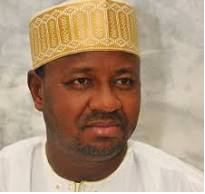
As Plato, a classical Greek philosopher, put it, ‘one of the penalties for refusing to participate in politics is that one ends up being governed by one’s inferiors.’ Factually, the Nigerian political landscape is filled with all sorts of unable characters as elected representatives of our communities. The bulk of participants, whether at national or state legislative, executive and Local Government levels, are made up of incompetent politicians of lowly character, many of whom are deliberately chosen purposefully to be ‘yes men’ and pawns for more astute selfish politicians. In most states and Local Governments of Northern Nigeria, the region where I come from, the situation is particularly pathetic in that persons of low, or even no, formal education, experience or exposure bestride over public offices, both legislative and executive. The situation is even worse at the party level where most of the occupiers of the party executive offices at the Ward, LGA, State and Zonal chapters could be stack illiterates. Being therefore mostly ignorant of the provisions of the party constitution, party rules and regulations lost their significance and essence. Similarly, party manifestos make no meaning to such ignoramuses elected into public offices. The combined effects of all these is the creation of a weak political foundation for the country, especially at the local government, state and legislative arms of government.
It is clear to all discerning minds across the country, especially after the seven general elections, that the political situation has turned ugly and there is now a dire need for remedy if democracy is to survive in Nigeria and be a tool to her national unity and development.
Bertolt Brecht, the influential German Marxist, dramatist, stage director and poet of the 20th century, observed that:
“The worst illiterate is the political illiterate. He hears nothing, sees nothing, takes nothing, and takes no part in political life. He doesn’t seem to know that the cost of living, the price of beans, of flour, of rent, of medicines all depend on political decisions. He even prides himself on his political ignorance, sticks out his chest and says he hates politics. He doesn’t know, the imbecile, that from his political non-participation comes the prostitute, the abandoned child, the robber and, worst of all, corrupt officials, the lackeys of exploitative multi-national corporations.”
It is thus obvious that efforts must be made to save our politics. Being the only institution by which government can be formed through elected representatives, we must first and foremost rise to save party politics from the debilitating effects of illiteracy, ignorance, fraud, force and abuse. Provisions of Sections 65(2)(b), 106(d), 131(c) and 177(c) of the 1999 Constitution of the Federal Republic of Nigeria (as amended) have outlined the role of political parties in the formation of governments for the country as represented by elective members of the legislature and executive. No person can be elected to any office of the two arms of government except they belong to a political party and are sponsored by that political party. This means that all members of the legislature and executive are products of political parties, which has two key implications to the major thrust of our national politics. Firstly, as products of political parties, it establishes the supremacy of the party over elected officials; and secondly, as members of political parties, it defines the position of the party in the formation of the government. In this circumstance, therefore, it is clear that political parties, under whose umbrella the government belongs, have the singular duty of both putting up governments and managing intergovernmental relations with the express objective of narrowing the azimuth of conflict, creating amity, and enhancing stability and development in the polity. This means the invocation of the principle of good and responsible citizenship must start from the party level.
This is what makes it important for every person who holds such views to actively participate in the politics of the country so as to remedy the situation. To participate in politics, one needs to join a political party .
Problem of Internal Democracy in the parties.
It is a well-established fact that the democratic maturity of a political party is measured by the level of its internal democracy, which comprises basically two key factors:
- The election of party leaderships (EXCO) by members of the party in a free, fair and transparent manner; and
- The nomination of Party Candidates (Primaries) for elective public offices by party members also in a free, fair and transparent manner.
These two factors constitute internal democracy. Their entrenchment in the electoral process automatically vests all powers in the hands of the people at all levels of the party organs. The central benefit of this is the widening and entrenching of participatory democracy, while also guaranteeing fairness, level-playing field and justice to all its members and aspirants in all manner of elections within the party. Also, given the fact that the right to vote and be voted for in a political party is an inalienable right of a member, the entrenchment of internal democracy guarantees the exercise of this right to all members. This places the powers of the party in the hands of the people. The obvious positive effect of this will be the reduction of friction and conflict and creation of harmony and amity within party members, which will reflect in the relationship between elected members in the various arms of government. It will also strengthen the legal and moral rights of the party to enforce its decisions on members.
To attain Internal Democracy, certain conditions- precedent must be met, the most central of which is the establishment and maintenance of a standard Membership Register as stipulated by law. This is a key requirement because other than providing membership data, it is the Foundational Electoral College for the operation of Internal Democracy – i.e. party democracy. The simple truth is that without a standard and authentic Party Register, there is no political party. This is the major problem in the political parties – they rarely maintain accurate, authenticable membership registers. Maintaining a credible membership registers is the first step to avoiding conflict and providing amity in the polity. Hence, since the parties always fail to do so, It is important for the Independent National Electoral Commission to enforce on them the process of upgrading, harmonizing and standardizing their register of members.
Lack of Participatory Democracy.
Once Internal Democracy takes root in the electoral processes of the party, a central element of participatory democracy is achieved. What simply remains is the establishment of wide and permanent institutional network and channel of communication for consultations and dialogue among the apparatuses and leaderships of all the party organs, stakeholders, financial supporters and, most importantly, elected members in the two arms of government, in all important matters relating to elections, appointments, policy formulation and implementation. This will reduce acrimony and conflict, and conversely create trust for the party leadership, cohesion for the party itself and cordial relationship between the elected legislative and executive arms of government.
To resolve issues and conflicts within the party, all decisions of party affairs must be taken on the bases of law and regulations and not on the bases of vested interests. This will be a core solution to most conflicts and grievances of members in the party that often spiral into the running of governments.
Unfortunately, Internal Democracy is commodity in short supply in the store houses of the country’s political parties. To be able to contribute in remedying this situation, I joined partisan politics, formally registering as a card carrying member of the PDP on Saturday, the 30th of April 2005.
Even though this was the first time of my joining a political party, I was not a complete stranger to partisan politics. Given my parental background, I can well say that I was born into a political family. I was born and raised in Kojoli, the fourth largest fiefdom within the present Ganye Chiefdom of Adamawa State, where my father, Ardo Ahmadu Kojoli, held sway as the local Village Head. In Fulfulde, the language of the Fulbe, Ardo means the head of a Fulani kindred group or clan. Under colonial rule, the British transformed this traditional clan title into an administrative Village Unit within the Native Authority structure. The fact that my father was the traditional head of our community made our household a political home of a sort, especially within the context of the First Republic politics of Northern Nigeria, in which the ruling Northern Peoples’ Congress (NPC) drew its membership mainly from the Fulani traditional institution.
Very importantly, I also grew up to meet my uncle, my father’s younger brother, Alhaji Hayatu Kojoli, as our constituency’s elected Member of the Northern Region’s House of Assembly. The fact that under the parliamentary system of government as then practiced, in which legislative and executive functions were both carried out by the same elected members, it will not be untrue to say that the entire government of our Regional Constituency was effectively in our household. I was therefore exposed to political activities and partisan politics early in life, even before I was knee-high above the ground. Also, in my early adulthood, I came to be deeply involved in the politics of Alhaji Atiku Abubakar, the former Vice President of Nigeria, who is all but a blood brother to me, having been born and raised together in the same household. Atiku undeniably followed the political footsteps of our uncle when he actively joined partisan politics. I and our entire household supported him unquestioningly in his political sojourn until he entered into the Presidential Villa as the Vice President of Nigeria in May, 1999. And thanks to him, I was appointed into the Presidential Villa first as Special Assistant on States and Local Government Affairs, and later as Special Assistant on Research and Strategy. Therefore, when I became a partisan politician myself, it cannot be said that I boarded an unfamiliar train.
My choice of PDP was partly circumstantial, but mainly deliberate and strategic. Circumstantial because I was serving in a PDP-controlled Federal Government as a Special Assistant to the President and Commander-in-Chief (deployed to the Office of the Vice President), but calculatingly strategic because the PDP itself as a political party had wide and strong support base across my state and the country. It had a progressive, robust and flexible constitution uniquely ideal for and adaptable to complex and culturally heterogeneous societies like those of Adamawa State and Nigeria. Its manifesto captured the imaginations and developmental needs of our communities, with durable guidelines, rules and regulations that, if strictly followed, would enhance the growth of our democracy and the development of our country. All these appeared to me as progressive, and so had strong appeal to my personal principles. These factors informed my decision to pitch my political tent with the PDP. However, from day-one of my joining the party, with my aspiration close to my chest, I was determined to ensure that I zealously guide, protect and advance my fundamental political rights to vote and be voted for. And since laws of Nigeria permit one to be voted for only through a political party, understandably party activities became the first major focus of my politics. My goal was to ensure that the partisan political game was played according to laid down rules and regulations so as to attain the robust standards envisioned of a political party. On this, there can be no compromise.
But alas, few practitioners, including individuals, groups, institutions and authorities are willing to play the game in accordance with the rules. Most players, especially the so-called powerful stakeholders whom the crooked system seemed to be working for, deliberately refuse to obey, follow or adhere to provisions of the constitutions, rules, and/or guidelines defining, regulating, directing and guiding their conducts in party affairs. Indeed, laws are more often obeyed on account of convenience than on its commanding face-value. In consequence, processes are routinely circumvented and institutions weakened to the point of ruin. In their place, individuals, groups and power blocs become stronger, operate in capricious and haphazard manner, holding the entire process down. This in turn creates operational dysfunctions in the system that make it near- impossible to move the party, the government and therefore the society. forward.
The PDP that I joined was the governing party both in my state of Adamawa and at the national level until 2015. By the party’s constitution, the PDP has five major organs or chapters. These are Ward, Local Government, State, Zonal and National organs. In addition, it has party caucuses at the Local Government, State, Zonal and at National levels. It also has a single Board of Trustees at the national level. The elections of its leadership are by congresses from the Ward to the Zonal levels, and by a convention at the national level. Over the years, the party created certain power blocs, mostly of elected public officers, such as Councilors, Local Government Chairmen, Legislators, Governors and Presidents. These officials, as in most organizations, eventually became the “leadership class” and the sole runners of the party. They more or less functioned as paid administrators, executives, spokespersons or political strategists for the organization. Far from being “servants of the masses,” this “leadership class,” rather than the organization’s membership, inevitably grew to dominate the party’s power structures. By controlling who has access to information, those in power further centralized their power successfully, often with little accountability, due to the apathy, indifference and non-participation of most rank-and-file party members in their party’s decision-making processes.
Robert Michels ( Political Parties: A Sociological Study of the Oligarchical Tendencies of Modern Democracy, 1915) argued that all democratic attempts to hold leadership positions accountable were prone to fail, since with power came the ability to reward loyalty, the ability to control information about the organization, and the ability to control what procedures the organization follows when making decisions. All of these mechanisms were being used to strongly influence the outcome of any decisions made ‘democratically’ by members. In this way, elected officials, especially governors and presidents, because of their determination to perpetuate themselves in power by controlling the election of party leaderships and nomination process in party primaries, and their absolute control of state resources, compellingly take hold of the party levers at all levels to the exclusion of virtually all other party members. They determine who occupy party offices and who gets party nominations. By so doing, hoping to guarantee themselves continuous governance in all arms of government, not necessarily for common good but mainly for their own selfish and bloc interests, they invariably created party oligarchy in place of internal democracy.
Thus, the PDP, regardless of how democratic it was when it was formed, eventually developed into an oligarchy. Under the undue influence of such entrenched oligarchs, party rules and regulations were perverted especially during congresses to elect party leaders and during primaries to nominate party candidates for public offices, which usually take place three to four months before general elections. Concavity and insincerity became the norms of party operations in such elections. The party was ultimately reduced to a mere tool for the use of selfish interests disguising as serving public interests. In this way, everything about the party became corrupted to secure and advance personal and bloc benefits, rather than carry outprogrammes of for the benefit of the general public. Any appeal to honesty was viewed as internal opposition, as the principle of party supremacy is undermined and subordinated to individual or group interests and their whims and caprices. They mock and resist all the prophylactic measures suggested for the prevention of oligarchy. While everything about the party is dysfunctional, everybody that can make a difference within the party hierarchy has become impervious to reason. It seemed that everyone whose interests is well served by the imperfect system is contented with the evil ways and did not want them changed or remedied. It is also clear that there can be no resolution of the situation as no party leader, from the ward and all the way up to the national levels, is ready or willing to correct proven abuses and redress genuine grievances of party members. This was the state of the PDP, even as at when I joined the party.
I tried all I could, using all my skills, including employing ‘book knowledge’ and scientific tools so as to win the political argument and turn things around but to no avail. I found it unbelievable the degree to which people with political beliefs, persuasions and interests can be obsessed in arguments to defend their positions. When defending their points, facts, truth and details simply do not matter to them as much as we think they do. Almost everybody acts emotionally, and they often completely shut their moral intuitions on certain things being right or wrong; making true the statement of Matthew Feinberg, a psychologist at Stanford University, that people “come to the conclusion first, and then the reasons they kind of pull out just to support their beliefs.”
As an academic, this runs counter to a lot of what I learned in school or read in scholarly books where logical precision is basic. But in appealing to politicians, whose views of the political world are different from one’s own, it would seem that to depend on facts and reason was utterly unhelpful. For example, when you ask them to explain their beliefs about how a given thing or action or position is, they actually become less confident in those beliefs. When you push further for them to explain why they hold such opinions, and request them to walk you through their view point, they almost always find many holes in those views, and hence come to realize the limitations of their own understanding. Nevertheless, as Frank C. Keil, a Yale University psychologist who studied intuitive beliefs and explanatory understanding rightly cautions, this won’t necessarily lead them to change their points of view. This phenomenon is known in psychology as the “illusion of explanatory depth.” Even though one makes them to realize how weak and tenuous their positions are, they nonetheless would refuse to take one’s own argument. Virtually nothing can be more frustrating.
Still, determined not to give up, I adopted another method devised by Peter Ditto, a psychology professor at University of California-Irvine, who studied emotion and its connection to political and religious beliefs. According to Professor Ditto, (a professor of Psychology and Social Behaviour at University of California, Irvine)
when people have their self-worth validated in some way, they tend to be more receptive to information that challenges their beliefs. This is partly because moods determine a lot about how receptive people are to new information or ideas: If people are happy and confident and are at ease, they are more likely to be open-minded. The problem generally is that political arguments, by their nature, tend to make participants angry and frustrated. So it is easy to be self-defeating here. Therefore, what needs not to be done is antagonizing people or openly implying that they are wrong, for doing so will only make them feel boxed into a corner — and that, Ditto’s research suggests, will harden their beliefs further. Instead, there are ways to possibly nudge them toward reason without threatening their entire worldview. This, I also tried to do, using generally known scientific techniques.
One of the most prominent current theories through which psychologists explain differences in political beliefs is called Moral Foundations Theory, or MFT. MFT posits that there are five foundations to moral beliefs: care/harm (whether other beings are being hurt); fairness/cheating (whether people are treating others fairly); loyalty/betrayal (whether people are exhibiting loyalty to their group); authority/subversion (whether people are playing by the rules); and sanctity/degradation (whether people are sullying physical or spiritual things that are sacred). According to the theory, politicians view these concerns differently, depending on where their interests lie. For some, especially those in opposition, care/harm and fairness/cheating are the most important of the five, while those in power are more concerned with loyalty/betrayal,/ authority/subversion, and sanctity/degradation. This is a powerful insight, because it can help one to know one’s opponent’s “weak points,” in a sense — which aspects of morality will resonate for them, and which will not. During a debate, one is more likely to make progress if one can appeal to the moral concerns of the people with whom one is talking. The idea that changing the moral framing can help convince people to rethink their views is both new even in Europe and America but can also be effective globally.
I subtly applied all these concepts and strategies in the bid to influence party members to the right cause, yet many of our party leaders and most so-called stakeholders still held tenaciously to their opinions, and continued to perverse party rules and regulations in their conducts.
Till date, this continues to remain the subsisting bane of participatory party politics in Nigeria.
(This discourse consist of excerpts from the book “Court and Politics” by Umar Ardo, PhD. first edition, and edited and modified by rnn.org.ng)