
The 700KM,10 lane Calabar-Lagos coastal road that incorporates a railway, and the 1000KM, 6 lane Badagry-Sokoto super coastal road that incorporates 53 dams, are probably the most ambitious projects ever embarked upon simultaneously by any Nigerian government
The 15 trillion Naira ($11 billion) 10-lane coastal road, to connect the west to the eastern part of the country, has drawn a lot of commentaries from every isle of the Nigerian socio-political commentariate. In the typical Nigerian style, to mute critics from the Northern end of the isle, the Tinubu led APC government has announced plans to begin the construction of a 1000-km, six-lane Sokoto-Badagry super coastal highway. While the Calabar-Lagos road would “incorporate a rail track in the middle”, the Sokoto-Badagry road, it is said, “will incorporate 53 dams that would be developed for agriculture and electricity and serve as trade routes with other African countries.”
While the Sokoto-Badagry road could very well be a criticism deflection afterthought, the many controversies of the Calabar-Lagos road cannot not be glossed over – on account of the North now gifted its own awe-striking phantasmagoric white elephant to salivate over.
One of the most bemusing character traits of Nigerian presidents is their penchants to embark on grand projects which they know too well that they have no capacity or even intention to complete, within the declared budgets, and time frames.
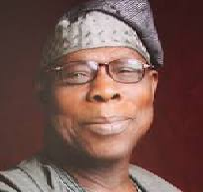
In 2006, the PDP government of President Olusegun Obasanjo embarked on the construction of the now infamous 675km East-West dual-carriageway to the enthralling euphoria of the communities and states of the Niger-delta territory. Originally billed to be completed in 3 or so years, and awarded at N211 billion, and later jacked up N726bn, the road was heralded with the same sound-bite socio-economic allurements as the APC’s and president Tinubu’s coastal road. For all the grandiloquent platitudes, it is now 15 years and counting, yet the elusive East-West mirage is yet to materialize.
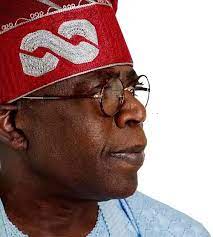
The rail track component apart, an add-on that looks like a convenient afterthought, aimed to deflect the criticism which the cost of the project has drawn, Tinubu’s coastal road bears striking similarities to Obasanjo’s East-West road.
First, at the time of their contract awards, both roads were without any engineering designs. This leaves informed minds to wonder how possible it is to execute an engineering project of such magnitude and significance, without a design that would determine the project cost and construction schedules. Secondly, both projects were not captured in the on-going budgets at the time of their awards. In the case of the coastal road, President Tinubu announced the multi-trillion Naira contract award with the same impromptu, military-style gusto and machismo, as his “subsidy is gone” declaration that stung the country and, is sinking it to its knees. But what do we know. Could be military style arbitrariness is what “taking bold decisions” is meant to be.
A telling duplicity in the project is the rail track component. The problem being, the number of Lagos-Calabar coastal rail lines the federal government can embark upon simultaneously – and to what objectives. If our memories have not totally departed us, we can recall that In November 2014, the government of President Goodluck Jonathan signed the 10-state, 22-station, 1,402km Lagos-Calabar coastal railway project, with China Civil Engineering Construction Corporation (CCECC). The project, financed with a $11.97 billion loan from china, was described as a vital infrastructure that would link all seaports from Lagos to near the Cameroon border, and it was scheduled to be completed in 2018. The project was later on taken over by the APC government of Muhammadu Buhari, following the victory of APC in the 2015 presidential election. Also, in May 2019, the then transport minister, Rotimi Amaechi, was quoted announcing that “the coastal rail line will run through all the coastal states in the country.” And that the government had approved $2.3bn for it in that year’s fiscal budget. Furthermore, in 2019 Lai Mohammed the then Information minister was reported as saying “This particular project is very important, especially for our coastal economy. The cost of the project is $11,174,769,721.74 and we have six years for the completion of this project.”
It is now 10 years and counting, and with the repayment of the $11b loan to China straining the national economy; for a coastal rail project that not a single meter of rail line was ever laid, we are been made to believe in the coming of another branded, “in-middle of 10 lane highway” Lagos-Calabar coastal road railway. Invariably, either one or both of these projects will turn out to be delusive phantom boondoggles.
Another red flag, is the auspiciousness of such a project, at a time the country is drowning in debt, and Nigerians are being strangulated by poverty and hunger. This raises the question of why leaders of failing economies would priorities grandiose egotistical white elephants over the reduction of the pervasive poverty that haunts their country and people.
Take the case of Egypt, where the president admonished his countrymen, who are being emasculated by hyperinflation, poverty and hunger, to accept his constructions grandiosities over their well-beings and livelihoods. “If progress, prosperity and development come at the price of hunger and deprivation, Egyptians, do not shy away from progress! Don’t dare say: ‘It is better to eat.’” He was quoted as saying.
As was reasoned in that article, one of the logic for such misplaced priorities is that, frenzied spending on mega-projects, which are usually financed by foreign loans, provides the governments the optics of delivery on their “infrastructure” promises – a typically African style self praise gimmickry, purposed for the perfections of electoral legerdemains. The problem here is that the repayment of the accumulated foreign debt has to be financed through the appropriation of public resource. Hence, the debt repayment burden is ultimately passed to the populace to shoulder. This is usually done through the introduction of systems of regressive taxations – that end up eventuating a toxic cycle of structural poverty that whittles away incomes and ruin the local economy. The worst part of this is that, in the Nigerian instance, the projects for which the loans are obtained never get executed, while the money appropriated is off-shored to foreign banks for the acquisitions of luxury overseas properties.
The other problem is the degeneration of our democracy, and its associated election system, into a money driven oligarchical charade. Hence, the most important criterion that determines how aspirants fare in election runs is the quantum of money they could muster and throw at the system; this drives desperate aspirants into the dependencies of puppeteer oligarchs and profit seeking corporatist. Thus, once elected into office, policies, programs and projects are conceived, not really for the best interest of the larger society, but to assuage the whims and demands of the financier oligarchs and corporate titans.
This could very well be the case with Tinubu’s trillion Naira coastal road contract award to the Chagoury corporatist titans.
The story of the 2023 elections is that the contestants deployed massive sums of money at every stage of the process. In the case of the presidential elections, it borders in the range of billions of dollars; spent at such a scale that no one candidate, no matter how rich, can possibly muster singularly. Yet top officials of the APC have declared, at several instances, that the party did not contribute a dime to the Tinubu campaign; implying that it was singularly financed by the candidate. This, despite the famed wealth of the man, is absolute nonsense.
True, President Tinubu, and our ever decorous first lady, the majestic Senator Remi Tinubu , in the run up to the presidency, had told us that they were already fabulously ‘made’ financially, and were not driven in the race by the allures of the public treasury. But how really true is this?
From publicly deposed records, President Tinubu was not associated with any notable business accomplishments before his 8 year stint as governor of Lagos state. After while, apart from the controversial Alpha-Beta public taxation legerdemain, his combined media empire, the nation, TVC et al cannot be described as pace setting money spinners. So what is the source of the fairy tale super-wealth? The probably answer is Oando Plc, the oil and gas play that, on paper, is owned by his younger cousin, Wale Tinubu.
But if we consider how Nigerian public office holders proxyfy their businesses, using friends, family members and sundry associates, to mask their true ownerships, the disguised hands of Tinubu in Oando Plc, cannot be a subject of much debate. Anyway, given the way we know how such things are done in our clime, how in hell, could the then Nasir el-Rufai led BPE privatization regime, disposed one of the nation’s crown jewels, Unipetrol, to a masquerading Wale Tinubu, without conclusively ascertaining the identity of the person behind the masquerade? More so, given the great amity that then existed, between the then Vice President, Atiku Abubakar, a major superintendent of the privatization program, and Tinubu, then, Governor of Lagos state.
But, as we have come to learn, Oando is company whose operations have been heavily basis on serious leveraged financing. Furthermore, driven by the ambition to dominate the industry, the company had embarked on some very expansive debt financed acquisitions. Some of the borrowed money, it is alleged, had not been used for their intentioned purposed, but were diverted into luxury acquisitions and political empire building adventures. Such mismanagements is now forcing the Security and Exchange Commission (SEC) to move to extricate the publicly quoted company from its spend-thrift, flamboyant owners.
The uncomplimentary state of affairs at the company eventually compelled its multi-million dollar creditors to come calling for their money – most of which, unfortunately has disappeared down ego-tripped sinkholes. Some of these creditors, like Chief Gabriel Volpi of Intels/Orleans Invest conglomerate, backed by court judgments, began cycling the company, intent to take it over.
The point in this is that, prior to the time of the 2023 elections, Oando, the money mint flagship of the Tinubus, was deep down to the neck in a dark alligator-filled swamp of debt. Tethering towards bankrupt insolvency, the company was at the verge of being dispossessed from the control of the Tinubu clan. The only viable way out of the looming disaster was to source more loans; from understanding oligarch-associates, to prosecute a derring-do, presidential ‘grab, snatch and runaway with it’ adventure. Thus, the entire “emilokan’ thing has to be understood for what it really is – a desperately existential financial salvation mission.

Now that it is “mission accomplished” time, the payback of borrowed money to benevolent corporatist financiers has to be effectuated – through the public procurement processes.
No doubt, the hurried multi-trillion Naira coastal road project has much to do with the repayment of a highly leverage-financed election victory. But we can be grateful for the kind-hearted consideration to stagger the pay-back over 8-years. Thank God for the little mercies, we are indeed grateful!