
Over the last few months, the Nigerian military has dealt serious blows on the Boko Haram terror group, virtually dislodging it from its sambisa forest hideout, in the northeast of the country, where it had fortressed and ensconced itself for years. This is forcing it to change its tactics.

At the beginning of its terror campaigns in 2009, suicide bombing, using crudely assembled Improvised Explosive Devices (IED’s), strapped on the bodies of ignorant, most times, drugged teenagers, was the modus operandi, by which the boko haram extremist siege and terrorized the country. This was when all manners of grotesque barricades, which defaced the entrances to public buildings, markets, and street corners became ubiquitous around the country. This operative modality changed, especially, after the group joined forces with ISIS, the international terrorist masterminds.
Deluged with limitless supply of weaponry, and egged on by internal and external collaborators, from whom it received financial, intelligence and logistical facilitations, Boko haram reached the zenith of its powers. The group could stand toe-to toe against federal forces, was able to push them back severally, and took control, and held, a large swath of territory in parts of Borno, Adamawa and Yobe states , the place where it aspired to established its dreamed caliphate.
Over this time, at least 20,000 people have been killed since boko haram began its insurgent campaign of terror in 2009. Also, more than 2.6 million people have been rendered homeless, and are now displaced at the numerous Internal Displaced People (IDP) camps dotting the north-eastern states.
Gradually, the Nigerian military depoliticized, got its act together, and started to live up to its security responsibilities and obligations to the country. It went on the offensive, and began the systemic decimation of the structures of boko haram. So far, it has successfully evicted the terrorist group from all its still-born caliphate annexes, and has attrited it to such extends that it has lost all offensive capabilities, and the capacity to take or hold territory. Hence in 2019, at the twilight of his, better forgotten, presidency, former President Muhammadu Buhari was confident that Boko Haram had been defeated.
Faced by the relentless onslaughts of the military, Boko haram retreated and confined itself to its seemingly impregnable sambisa forest enclave, from where it continued to stage sputters of hit and run raids on remote villages and field out posts of the military. Apparently, the change in government in 2023 had worked to further verve up the military, who have since revved up the anti-terror war against boko haram, even daring to take the fight to its sambisa forest lair. Finally, last month, the military announced that it had flushed out the Boko Haram fighters from their sambisa forest stronghold.
So, if they have been kicked out of sambisa, where would be their likely fall-back to place, and what would be the next terror tactic of the virgins-loving, anti-literacy (boko-haram), insurgents? The answer is what is now unfolding in and around Borno state.
The terrorist and their harem of kidnapped virgins, and the offspring of those, at-gun-point, forced marriages, have, very likely, melted into the villages and towns of the north-East, and are being hosted by their now awaken “kith and kin” sleeper cells, which are now readied to execute their leader, Abubakar Shekau’s commands. His command apparently came shortly after their eviction from their sambisa enclave.
Shekau, segueing the fall of his sambisa headquarters, had released a video in which he called on all his supporters to hit the Nigerian population as hard as possible, using every means they can muster; bombs, guns, arson and throat slashing.
What Shekau’s order really translates to is that the boko-haram insurgency is now gone full cycle, and is now reverting to its urban terror bombing campaign modus of its genesis years.
The sequence, and time line, of events over the recent days are pointers to this metamorphous rebirth of the boko-haram group.
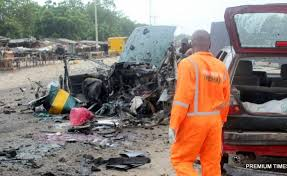
On Saturday, the 29th of june, a coordinated suicide bombing campaign of terror was staged in Gwoza.
first, a starry-eyed woman, carrying a baby on her back, and explosives strapped on her body, made her way into a crowded wedding venue and then detonated her body-worn bomb. The explosion ripped through the wedding venue, killing several people and maiming scores of others.
Almost synchronously, in another attack, a child suicide bomber detonated her body-worn explosives at a busy motor park located in center of Gwoza town.
Then shortly afterwards, knowing where the victims of their gruesome acts of terror will be headed to, a third blast – also set off by a suicide bomber, ripped through the main hospital in Gwoza.
Then less than a week later, a teenage girl detonated her body-worn Improvised Explosive Device (IED) at a mosque in the staff quarters area of the University of Maiduguri. The suicide bomb blast reportedly killed at least four people and injured 15 others.
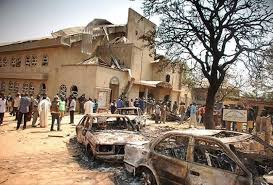
This modus of urban bombing was how boko haram started its terror insurgency at its genesis, in 2009.
While the loud blast of exploding bombs, and the equally loud wailings of injured survivors and relatives of the deceased victims, may have re-thrown the national limelight back on boko haram, it is very doubtful if the renewed acts of terror represent the resurgence or renewed vigor of the terror merchants. On the contrary, just as it is the situation with ISIS, their Middle Eastern alter ego, these acts of bravado bombings, rather than heralding the resurrection of the phoenix, could very well be the last kicks of a dying donkey.