Our discourse series on the emergent leadership of the African Democratic Congress, ADC continues as we take a look at the interesting profile of Mr. Nasir El-Rufai; a liberal reformist politician, and a major force in the repositioned ADC party that is poised to challenge the ruling party, and to shape the outlook of the 2027 election and national politics.
Nasir El-Rufai: The privatization czar and reformist advocate of lean, functional governments:
Personal Attributes, Social Engagement & Characteristics:
Nasir El-Rufai, 65, is a Nigerian politician who is fast gaining reputation as the stormy petrel of Nigerian politics. Trained as a quantity surveyor at the Ahmadu Bello University, the educationally ‘restless’ El-Rufai, who also holds a Master of Business Administration degree from the same Ahmadu Bello University, has attended several professional and post-graduate programs, including the Georgetown School of Foreign Service of Georgetown University in Washington, D.C., bagged a law degree from the University of London, and a master’s degree in public administration from the John F. Kennedy School of Government of Harvard University. He has also received the Kennedy School Certificate in Public Policy and Management. And, in 2011, he enrolled for a Doctorate Degree in Governance and Policy Analysis at the United Nations University (Maastricht Economic and Social Research Institute on Innovation and Technology) in Netherlands.
Having ran a successful professional private practice prior to his venturing into politics, El-Rufai is financially well off, and even at 65, he remains physically robust, and still bears his remarkably boyish looks. The arctypical Fulani, El-Rufai is a determined, confident, and a highly calculating person.
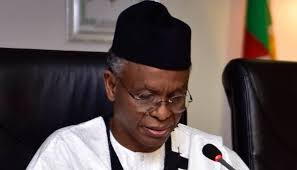
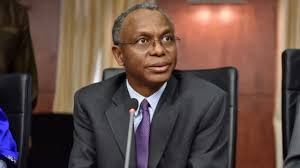
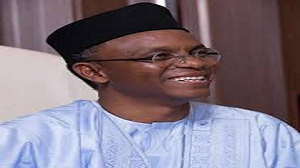
Following stints as governor of Kaduna State from 2015 to 2023, and as minister of the Federal Capital Territory from 2003 to 2007, El-Rufai has become an established leadership figure in the national politics of Nigeria, and he has gained reputation as a liberal reformist who is a strong believer in lean governments and result-oriented governance. His is also lauded as a skillful political strategist. His strategic political planning acumen are seen in the roles he played in the formation of the Congress for Progressive Change (CPC) party, and his strategic inputs in the merger negotiations between the CPC and the ACN party that led to the formation of the Coalition APC party in 2014.
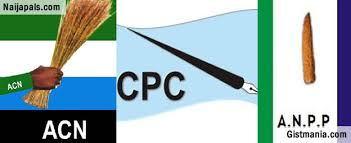

His efforts and contributions in these political projects culminated in the victory of the APC in the 2015 presidential election, and his election as the governor of Kaduna state. El-Rufai’s thoughtful, amenable, and disarmingly stooping to conquer personality are attributes that count in his favour in Nigeria’s consensus and negotiatory politics.
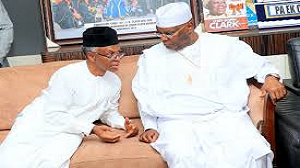
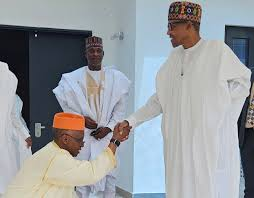
While he could be steely and resolute, he is also an easily amenable and reconcilable person who is famed for not bearing permanent enmities, irrespective of the gravity of past differences. Though ever willing to articulate and defend his viewpoints, he listens to alternate opinions, and easily forget bygones in the interest of his strategic objectives. His antecedents show that he is a technocratic person who values efficiency, competence, and accountable governance. A champion of liberal ideas of governance, his media engagements are characterized by his critique of government incompetence, mismanagement of resources, and poor macro-management of the economy.
Political Vision, Ideological Stance & Leadership Engagement
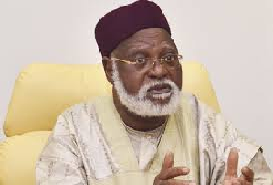
A dye in wool liberalist, the pioneer Director General of the Bureau of Public Enterprises (BPE), former Minister of the Federal Capital territory, and two-term governor of Kaduna state, Nasir El-Rufai’s political vision is to bring his extensive education, Western liberalist governance ideas, and his technocratic competence, to guide the governments he contributes in bringing to power in providing competent leadership, and accountable and result oriented good governance which A reform minded apostle of private sector led economies, El-Rufai has been a major driver of the desocialization of governance in Nigeria. This drive began from his being appointed as economic advisor to military head of state, Abdulsalam Abubakar, in 1998, with the mandate to head the transition team to work with the World Bank, International Monetary Fund, and other financial institutions on the national privatization program preparatory to the 1999 presidential election. Subsequently, following his appointment as the inaugural Director General of the Bureau of Public Enterprises, and as the secretary of the National Council of Privatization, he spear-headed the extensive privatization program of the Olusegun Obasanjo led PDP federal government.
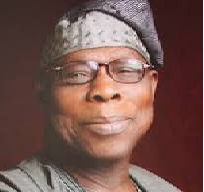
But El-Rufai liberalistic reforms go beyond privatization. Having led the reform of the Nigerian public service and also served prominently in the Economic Management Teams, of both the PDP government of president Olusegun Obasanjo, and that of the APC government of President Mohammadu Buhari, he is a consistent advocate of prudence, the curtailment of spendthrift wastefulness, the judicious application of public funds, and of knowledge driven inclusive governance.
Thus, when the APC government of President Bola Tinubu, though itself liberalistic, choose the path of vainglorious divisive cronyism and unaccountable wasteful binge spending – choices that worsen social cohesion, exponentiel inflation, and aggravate the impoverishment of the populace, El-Rufai was quick to engage with other opposition leaders who constituted the National Opposition Coalition Group (NOCG), to begin the building of a formidable opposition alliance to challenge the incompetent mal-governance of the APC federal government. His appointment as the leader of the ADC, the party of the opposition coalition, in the North West zone of the country, a position that makes him responsible for organizing and implementing the strategies and programs of the opposition party in the states of the north west, the part of the country that is most damaged by the impoverishing policies and crony ethnocentrism of president Tinubu’s APC government, is a recognition of El-Rufai’s reformist reputation and his calculative political acumen.
Reforms minded, El-Rufai believes that governance should be knowledge driven, inclusive, accountable, and results oriented. And also, that competence and capacity should be the chief criteria for selection into management and leadership offices. This convictions aligns him with those who advocates for reforms that rid government of wasteful spending, incompetents, and mediocrities; postulating that these are the factors responsible for the systemic dysfunctions in the institutions of government, and of the leadership failures that plaque the country. This reform mindset makes El-Rufai more than the usual run in the mill politician, but situates him as an agenda setting political strategist who is actively shaping the political trajectory of governance in Nigeria. His politics is not centered on mundane clichés and verbiage, but is focused on issues that strategically shape and define the socioeconomic direction of the country.
Influence & Networks
Having held numerous positions of strategic importance, Including advisory positions in the presidency, as the de-jure head of the apex national privatization program, as minister of the federal Capital Territory, and as Governor of Kaduna state, El-Rufai has build a network of influence that spread across the most valuable and substantial political and economic circuits of the country. This undoubtedly makes him not just an influential figure, but also a bonafide member of Nigeria’s club of power brokers whose voice is listened to, and whose every action attracts serious attention.
Advocacy & Social Contributions
As a technocrat and a consummate reformist politician, El-Rufai’s foremost interest is in guiding Nigeria to socioeconomic advancement. The focus of his advocacy has been the reform of the public service for efficiency and functionality, and the reorientation of governance towards the competent management of public resources for the good of the people. An apostle of lean, functional, and productive governance, he ranks high among Nigeria’s liberal political elites who are opposed to unnecessarily bloated governments and of wasteful and inefficient allocation of public finances to vainglorious projects.
Thus, as governor of Kaduna State he adopted the Treasury Single Account policy, which is designed to block avenues for the plunder and misuse of government revenue by public office holders, and to cut the cost of running government, as his first act in office . Also, in his bid to further reduce the cost of governance, El-Rufai reformed the state civil service and ran a lean and more functional government. He reduced the number of ministries from 19 to 13 and the number of permanent secretaries from 35 to 18, appointed only 13 commissioners, 10 special advisers and 12 special assistants as against the 24 commissioners, 41 special advisers and about 400 special assistants appointed by the previous administration.
Functional governance, and the socioeconomic development of the country are the subjects that are of the most interest to Nasir el-Rufai, thus his public outings and media interviews mostly dwell on these subjects and on his opinions, and advices, on how the under-performances of Nigerian leaders impacts negatively on the socioeconomic well-being of the country.
Business & Economic Interests
Nasir El-Rufai is not only a politician, he is also a successful professional quantity surveyor and businessman. His El-Rufai & Partners, a quantity surveying consulting firm which he founded along with three partners has being in existence since 1982. The firm which is also involve with building and civil engineering contracting, was extensively engaged, between1983 to 1998, in the early days construction of Abuja ; which made the partners to become quite rich.
El-Rufai is also the co-founder of a venture capital firm based in Abuja, FCT. The firm is said to have outlaid US$100 million to invest in promoting entrepreneurship, and in resuscitating the economy of northern Nigeria. By this investment, El-Rufai is living his reformist advocacy, and leading from the front in combating the expanding poverty, and the worsening economic situation in the states of northern Nigeria.
Personal & Social Life
Nasir El-Rufai is married to three wives, one of which is the writer and novelist, Hadiza El-Rufai, who also runs the Yasmin El-Rufai Foundation (YELF), which she set up in honour of their deceased daughter who died in 2011. El- Rufai has many children, among whom is Muhammed Bello El-Rufai, who is a current member of the Federal House of Representatives.
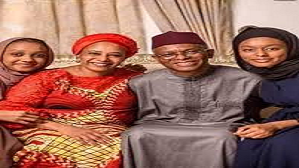
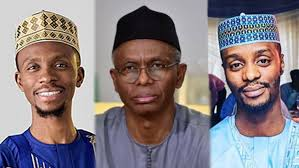
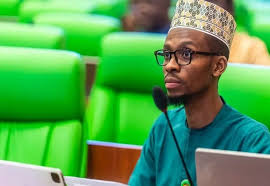
A devoted Muslim, El-Rufai is a strict adherent to Islamic moral codes and observances. Thus, his known social life is restrictive, and is limited to the usual traditional marriages, anniversaries, and coronations celebrations and felicitations; the typical social activities of high-end Muslim political leaders of his stature.
Strategic Goals & Future Directions
In Nigeria’s ideologically amorphous and ill defined political culture, El-Rufai’s politics stands out as being truly liberalistic and reformist. His strategic goal is to drive reforms and to pilot Nigeria’s governance culture along the western liberalistic ideals of private sector driven economic development, under the supervisory oversights of lean and functional governments that work for the good of the people. It could be taken that his present activities in the National Opposition Coalition Group (NOCG) and the ADC party he has joined is aimed to achieve the formation of a government that aligns with his ideological stance.
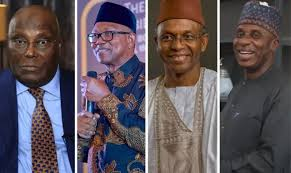
His teaming up with Nigeria’s other reform minded leaders with whom he had worked with in past governments, leaders such as former vice-president Atiku Abubakar, former senate president, David Mark, and former governors Rotimi Ameachi, Rauf Areboshola, and others, in the same coalition party, the ADC, suggests that he is more at home with leaders and people who are familiar and comfortable with his ideological leaning, and who believe in the strategic objectives of his politics, which are to stem government dysfunctions, and to apply prudence and accountability to guide the country to socioeconomic stability and progress.
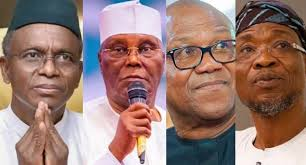

As the leader of the coalition’s ADC party in the North West, El-Rufai’s immediate goal is to guide and rally the ADC to victory in the 2027 election. As challenging as the task of going up against an incumbent government may be, his previous yeoman contributions, which led to the formation of the ruling APC, and to its victory in 2015 election against the than ruling PDP government, are potent reminders that El-Rufai’s steely resolves and political strategizing acumen, do not count for noting. Thus, El-Rufai is going into this mission confident and optimistic of success; of the victory of the ADC in the 2027 election; in the success of its mission to reform the Nigerian polity, and to guide the country along paths of competence and result-oriented governance.
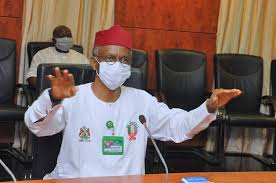
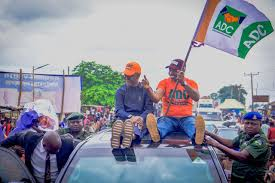
Prognosis and Final Words
Nasir El-Rufai is undoubtedly, one of Nigeria’s top political leaders. A liberal reformist and advocate of competent and purposeful leadership, he is a bridge between the new generation and the old breed political leaders of the country. He differs from others in his clearly recognizable ideological leanings, and in his contempt for mediocrity. His approach is pragmatic, and is leveraged on his technical knowhow, leadership acumen, and is amenable character. His prioritizing competence, capacity and functionality are the qualities that earn him the title of Nigeria’s czar of reforms. A title which connotes that he still have much roles to play in the building of a Nigeria that works and functions properly for the good of its people.
In conclusion, El- Rufai’s profile is one of capacity, competence, and knowledge driven leadership. As a professional quantity surveyor, and a politician, he marries technical knowhow and political dexterity to create a vision of a functional and prosperous Nigeria – a profile which eminently qualifies him as one of the leaders who is poised to shape post-2027 Nigeria.
Share the story. Listen to the podcast here, and subscribe to our youtube channel to follow subsequent podcast episodes of the Agenda 2027 series.
You can create wealth, live healthier, look better, and be more knowledgeable. You deserve this life! Do not hesitate to earn it, visit our marketplace today.