By: Nigerian Patriotic Youth
The 2027 general elections would be the 8th in the election cycle of Nigeria’s political landscape since 1999. These elections have throughout been dominated by a cadre of elites who, despite their varying party affiliations, have consistently failed to address the systemic issues plaguing the country. In fact, over the years, they actually turned out to be the major problem of the country. The politicians who occupied high echelons of power during this period, with few exceptions, represent a recurring cycle of leadership failures that have entrenched and perpetuated poverty, illiteracy, stark inequality and exacerbated insecurity.
The evidence is clear: the methods, policies and governance paradigms of these “pioneer politicians” have been insufficient to chart a transformative path for the country. As no form of alliance among them will change their political philosophy beyond mere acquisition of power for narrow interests, a major political shift is thus required – a political renewal led by a new generation group with new vision, innovation and moral clarity to redirect the political trajectory of the country!
These “pioneer politicians” simply transformed themselves into the country’s ruling class, or better still ruling oligarchs, but failed to fulfill their promises of development, equity and progress. Under their leadership, the country, and especially the North, though blessed with abundant human and material resources, became a global emblem of unrealized potential, headquarters of poverty and laughing stock of the world. Regardless of their ideological leanings or political parties, they presided over the decline of public infrastructure, the erosion of institutional integrity and the exacerbation of socio-economic disparities. These failures are not incidental but are deeply rooted in their leadership ethos of prioritizing personal gain over collective good.
The pioneer ruling class or oligarchs acquired and maintained power and clientage through patronage networks, electoral manipulation, subterfuge and the compromise of judicial process. Their governance is marked by what I call “short-termism”, where immediate political gains trump long-term planning. The result is the collapse of the Nigerian society. The populace remain marginalized, their potential stifled by lack of opportunities and systemic neglect.
Clearly, the prevailing methods of governance by the ruling class have not worked. If Nigerians truly aspire to come out of this situation, they cannot afford to be tethered to the failures of these oligarchs. The envisaged political renewal requires fresh perspectives and approaches, which the oligarchs failed to provide. Hence, any alliance of these politicians with a view to either remaining in or returning to power would not be in the interest of the country. The renewal is not merely a change in individuals but a fundamental shift to usher in new leaderships equipped with fresh ideas, acumen and genuine commitment to public service – a cadre of new leaders that is well informed, globally connected and fair minded to deal with all the component parts of the country!
The urgency for this renewal is underscored by the current deepening national crises. The correlation between poverty, insurgency and governance failures is well-documented. As long as the current oligarchs remain in or return to power, the cyclical nature of these issues will persist. Ted Gurr’s assertion that “when expectations go up and results go down, men rebel” is particularly relevant to the current Nigeria’s context. It is the unfulfilled promises of the oligarchs that have overtime bred frustration and disillusionment in society, and ultimately fueled insurgencies, banditry, ethnic tensions and calls for separatism.
A new Nigeria demands leadership that is not only competent but also principled – that will emphasize meritocracy, where leaders are determined by capability, character and vision rather than patronage or affiliation; that will prioritize economic decentralization to bridge the gap between the rich and the poor by implementing policies that ensure equitable distribution of resources and opportunities; that will strengthen democratic institutions to guarantee credible elections, uphold the rule of law and ensure judicial freedom; that will ensure social integration by promoting inclusive policies that address the root causes of ethnic and religious divisions; and that will entrench educational and technological advancement by harnessing education and technology to drive innovation, improving governance and creating wealth and opportunities for everyone.
This transformative leadership can only emerge if elites of good standing, knowledgeable, patriotic and progressive actively participate in the political process. The current disengagement of such elites from politics must be reversed through deliberate efforts of creating an environment that is conducive to their involvement.
The pathway to this renewal begins with a collective acknowledgment of the failures of the past and a resolute commitment to forge a different future. It requires building enduring political networks that promote dialogue, consultation and collaboration among such elites, creating strategic influence in Nigeria’s politics. This will both facilitate the formation of a new political party (The All Democratic Alliance) that will serve as the platform for genuine democratic engagement rather than a vehicle for personal ambition and systematically accelerate the dismantling of the structures that enabled the dominance of the old guard. The formation of the League of Northern Democrats is an attempt to create one such pathway, at least for Northern elites.
Civil society and the media have critical roles to play in promoting this renewal as envisaged by the LND. By exposing reasons for past failures, advocating for policy changes and educating the populace, they can create the conditions necessary for the emergence of such new leadership. It will also attract international partners to align their support with such initiative that promote good governance and human development.
Nigeria’s destiny lies not in the perpetuation of failed leadership but in the audacity to embrace real change; and not rhetorical change. The political elites who have steered the nation since 1999 have proven themselves incapable of delivering the transformative leadership Nigeria desperately needs. It is time for a generational shift, a movement toward a new cadre of leaders who are not only visionary but also equipped to navigate the complexities of modern Nigeria
This political renewal is not merely an option; it is an imperative! The future of Nigeria depends on the courage of its people to initiate and effect this change. Patriotic elites must rise to the occasion, for they are not just the saviors of the day but the architects of the country’s future.
To achieve the goal of creating a sort of renaissance for a greater future for Nigeria certain patriotic elites have been working tirelessly and consistently, albeit unsuccessful yet. One key person in this endeavour is Dr. Umar Ardo. An intellectual, a historian by training, a university lecturer by profession and a political strategist of repute by aptitude, Dr. Ardo is well-educated, financially stable, physically healthy and imbued with a strong sense of personal confidence and self-worth. He is an emergent leader who is deeply patriotic and committed to reversing the socioeconomic and political decline of Northern Nigeria and the Nigerian State. His strategic and analytical thinking acumen can be seen in his efforts to develop a leadership selection template known as the ”Order of Mean Score”, a framework for evaluating leadership candidates. Dr. Ardo’s charismatic, confident, down-to-earth and humble personality are attributes that stand him out as a natural leader in Nigeria’s political and intellectual circles.
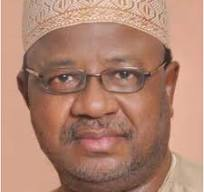
While quite assertive, he is also a rather thoughtful person who, though ever willing to challenge prevailing narratives, always ensures to back up his positions with provable facts and historical evidence. His antecedents indicate that he is a person who values history, leadership, and governance issues. Thus, he often engages in critical political discourses, analyzing historical events and pointing out lessons applicable to present-day Nigeria.
As the convener of the League of Northern Democrats (LND), a group dedicated to reshaping Northern Nigeria’s political trajectory, Dr. Umar Ardo is an avid believer in merit-based leadership and the need for enlightened elites to guide Nigeria toward sustainable development. Hence, he is actively engaging key stakeholders such as the Arewa Consultative Forum (ACF), Northern Elders Forum and the Middle Belt Forum to build alliances for regional and national political transformation.
As a former Presidential Adviser under the President Olusegun Obasanjo regime, deployed to the office of Vice President Atiku Abubakar, Dr. Ardo is one leader who recognizes the historical decline of Northern leadership, particularly after the death of Sir Ahmadu Bello, the first premier of Northern Nigeria, and General Murtala Muhammad, Nigeria’s 3rd military head of state, and thus actively engaged in works and processes to restore unity among the northern elites as part of a wider strategy to restore the political influence of the north in national affairs. When viewed from this premise, his politics, while seemingly regional, is nationalistic, as it is centered on reviving the glory of Northern Nigeria as an integral component of a stronger, united Nigeria. To further buttress this viewpoint, few people are aware that Dr. Ardo was the one who conceived and developed the strategic blueprint advocating for power shift to the South South, and initiated and guided the 2007 Dr. Odili for president campaign as the director of strategy.
Dr. Umar Ardo’s activities show that he is not a politician who only talks about Nigeria’s worsening political situation, but is one who is actively seeking to find workable solutions and fixes to the problems. His “Order of Mean Score” framework for evaluating leadership selection is part of a larger ambition to reshape Nigeria’s political culture. His regular engagements with former presidents of the country, such as former Nigerian presidents, Olusegun Obasanjo, Ibrahim Babangida and Abdulsalami Abubakar, and foremost leaders like General TY Danjuma, General Martin Luther Agwai, General Dambazau, and a host of others, suggests that he seeks to tap from their experiences to find the best cures for the social malaises and governance ailments of the country. The widespread opinion is that his work with the League of Northern Democrats (LND), which is centered on reviving Northern Nigeria’s institutional and moral foundations, could become a very significant political operation in Northern Nigeria, and Nigeria as a whole.
Even though he likes to describe himself as a politician, most people actually see Dr. Ardo more of a political activist. His candour and plain speaking, no matter whose ox is gored; his courage and fearlessness and his decisiveness and actions when the need arises; his balancing attention to details while taking view of the wider picture of issues at hand; his rather forceful arguments and judgments once he is clear of what is at stake, often informed by his historical knowledge – all set him apart from ordinary politicians of the country in a distinctive and substantial manner. Always trying to drag history up a little nearer to our own times, he tries to get the lessons of the past to be helpful in solving present difficulties.
Unlike most politicians, Dr. Ardo never refrained from conflict when he believes that an issue must be resolved. A crucial aspect of Ardo’s strategic gifts in molding public opinion on politics requires sufficiently great insight to be better understood and appreciated. Given his energy, drive and encyclopedic mind, demonstrated in the many political ventures he undertook in the course of his political adventures, it would seem that Dr. Ardo is not well-suited for any position than a chief executive. His courage, relentlessness and persistence, misled many to view his aspiration for political power with dread and alarm. Indeed, from sheer activity of mind, Dr. Ardo will very soon become incapable of being anything other than the country’s president.
As 2027 elections cycle approaches, requiring the need for a profound shift in Nigeria’s political philosophy beyond mere acquisition of power for narrow interests – a major political renewal led by a new generation group with new vision, innovation and moral clarity to redirect the political trajectory of the country – it is people like Dr. Umar Ardo that should be looked out for!
Share the story!
Listen to the podcast here and subscribe to our youtube channell to enjoy our informative podcast shows.
You can create wealth, live healthier, look better, and be more knowledgeable. You deserve this life! Do not hesitate to earn it, visit our marketplace today.