Former governor of Rivers state (2007-2015) and Minister of Transportation, (2015-2023) Rotimi Amaechi, has revealed that despite being in the same All Progressives Congress (APC) with president Tinubu in 2023, he did not support him while he was contesting to be President. He also asserted that the opposition can remove President Bola Tinubu from power in 2027.
Amaechi made this known while speaking on the theme,“Weaponisation of poverty as a means of underdevelopment: A case study of Nigeria,” during an event to mark his 60th birthday in Abuja on Saturday.
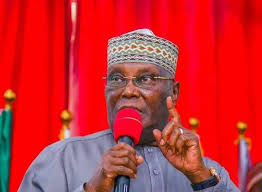
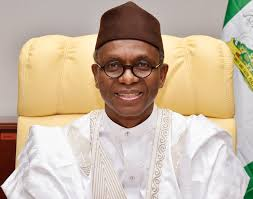
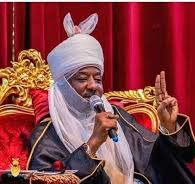
The public lecture which was held under the theme “Weaponization of Poverty” had in attendance Emir of Kano Sule Lamido Sanusi, Prof Wole Soyinka, Former Governor of Kaduna State Nasir El-Rufai, Governor of Bayelsa State Sierake Dickson, Former Vice President Atiku Abubakar, Cardinal John Onaiyekan, several traditional rulers, and several others
“Let me tell you, no Nigerian leader cares for the poor, because they know that Nigerians can do nothing to them once they are in power. When Nigerians protested, the President announced an increase in the price of fuel because they know you cannot do anything,” Amaechi said.
“I met President Tinubu in Yola and I told him I will not work for you and I will not vote for you.
“I told him like that. People have been saying I do not work for All People’s Congress (APC) or Peoples Democratic Party (PDP), that is because I was convinced that there was an issue of capacity.”
The former Governor of Rivers State further stated that ” for us, in the opposition, if you want us to remove the man in power, we can remove him from this power. We want to submit to the opposition if the opposition can lead us out of this problem. And for the opposition to lead us out of this problem, we must agree. to submit ourselves to the interests of the nation first before the interests of ourselves.”
Amaechi accused Nigerian leaders of weaponising poverty and stealing the money they are supposed to give to the citizens
“If I were president, yes, some of the policies they are pursuing, I would pursue them, however they are more interested in the gains than the benefits to Nigerians.
“Take for instance, we were paying N4-5 trillion on fuel subsidy, now that the subsidy is gone where is the money now, imagine if they had dumped it in the economy would an average Nigerians not felt the impact,” he said.
He stated “insecurity is 99 per cent poverty. Insecurity is increasing in Nigeria because there is hunger. When I was the governor of Rivers State and there was increase in insecurity, I knew that there was no money in the system so I direct my commissioner for finance to release money, pay salaries then insecurity will reduce. So it’s about poverty.”
In further remarks, Ameachi noted that Nigeria is where it is today because many Nigerians have been voting on a religious and ethnic basis.
“Let me tell you, no Nigerian leader cares for the poor, because they know that Nigerians can do nothing to them once they are in power. When Nigerians protested, the President announced an increase in the price of fuel because they know you cannot do anything,” Amaechi said.
He also mentioned that he is more concerned about moving the country forward and respecting people with requisite knowledge.
“Nigerian leaders and elites are not the problem of Nigeria; the problem of Nigeria is the followers. We say Nigeria is a capitalist country, but capitalists are those who invest in production, however, Nigeria does not produce anything, we just want to feast on the revenue gotten from crude oil.
“I was ashamed of one of my appointees when I was the Minister of Transport. I appointed her to improve and turnaround things around, unfortunately, she was more interested in speaking Hausa/Fulani to the President.”
He added that an ordinary northerner who is a Muslim has no problem with the ordinary southerner who is a Christian.
“It is when they come to elections, they will tell you. Now you have a Muslim-Muslim ticket. Let the Muslim-Muslim market come out now. It’s time. We are all hungry. All of us are. If you are not hungry, I am,” Amaechi said.
In his submission at the occasion, former Vice President Atiku Abubakar urged leaders in all tiers of government to live up to expectations and stop using poverty as a weapon to hold Nigerians to ransom. Atiku accused the current government of intentionally using poverty as a tool for political control.
“This particular government is weaponising poverty,” Atiku asserted.
He, however, noted that he and like-minded political leaders are united in a mission to salvage the country from its current state.
“We are in an alliance to ensure we don’t allow this trend to continue,” he said.
Atiku painted a grim picture of Nigeria’s present conditions, comparing them to the economic vibrancy of previous decades.
He said, “When I was growing up in the North, Kano was the most prosperous state. After secondary school, I moved there and never saw people sleeping on the streets.”
But according to him, the situation has drastically changed, with many now forced to live under bridges and on the streets due to rising poverty and insecurity.
He further alleged that the Kano State Government’s attempts to clear destitute people off the streets were blocked following instructions from higher authorities.
“There is an agency in Kano meant to support these individuals. They began working—educating people and relocating them from under bridges and open streets. But they were summoned to Abuja and ordered to stop,” Atiku claimed.
He stressed his resolve to push back against this development.
“You can call me a conspirator or anything, but this is why we’ve formed an alliance—to stop the continued use of poverty as a political weapon. One of our key allies in this effort is Rotimi Amaechi,” Atiku said.
The former vice president called for collective action against poverty, saying, “We will keep working with you to tackle poverty and ensure that government power is not used to deepen the people’s suffering.”
In his goodwill message during the occasion, the former governor of Kaduna state (2015-2023), Nasir El-Rufai, stated that Nigerians keep repeating the same mistake of electing the worst people into leadership positions. He said, “Nigeria is in its biggest trouble since 1914, and that is why we are together working and conspiring to build a coalition to take Nigeria back on track because it is off track.
“It has turned to this level because we have allowed bandits, not the ones in the bushes, but the ones in the urban area, called the urban bandits, to take over leadership.
“I believe that the problem that we have is that we just get incompetent people, and we hand over leadership to them. Most of them don’t really know what to do. They just know how to grab power but don’t know what to do with it.”
The ex-FCT minister called on citizens to choose wisely in the 2027 general elections. He urged Nigerians to stand up and vote for leaders who have the competence, capability, capacity and commitment to move the country forward.
“Our biggest challenge is selecting leaders who have the skills, vision, and dedication to move Nigeria forward,” he added.
Dwelling on the topic of the lecture, El Rufai, urged politicians and government at all levels to see their positions as a means of lifting the poor out of poverty.
He, said that politicians were not so smart to weaponise poverty except if allowed to do so, and urged the electorate to choose the leaders that could lift them out of poverty.
“I do not think politicians deliberately use poverty as a weapon. Poverty weaponises itself if allowed to exist like a pest.
“That’s what has happened in Nigeria. I do not think that politicians are that smart if they seek and recognize poverty.”
“For me, having been in the private sector and public service, and having been a true observer of our political deterioration, I believe that the problem that we have is the choice of leadership,” he said
Speaking on the same lecture topic, the prelate of the Catholic Church in Abuja admonished politicians to see their vocation as a service to God.
He said that politics should not be an avenue for the accumulation of personal wealth but to render service, which ultimately means uplifting the quality of lives of citizens to the glory of God.
Onaiyekan said that poverty would only be addressed, when those who control the electoral system allow the electorate to choose those who will lead them in a free and fair election.
He said that democracy would be sustained in the country when there was deliberate effort to address poverty.
While speaking earlier, Sanusi Lamido Sanusi, the Emir of Kano urged those saddled with the responsibility of leadership to inculcate the virtues of empathy with those they have been given a responsibility to lead.
Emir Sanusi, who is also a former governor of CBN noted with concern that he came face to face with poverty when he ascended the throne
“Many of the elites in Nigeria do not know what poverty is. As an economist and former CBN governor, I see the numbers. I did not know poverty until I became Emir.
“And you go to the village and see the water they drink, the houses they live in—two-block classrooms without roofs.
“Do we actually love the people, or do we just love ruling over them? What are our priorities?
“We make overpasses and underpasses for ourselves in the cities, while those in the rural areas cannot reach hospitals. We are in crisis; how to get out should be our focus,” he said.
Not to be let out, the former Executive Secretary of the National Health Insurance Scheme, Prof. Usman Yusuf, blamed corruption and bad governance for the multidimensional poverty in Nigeria.
He remarked that most of the cases being handled in hospitals today were not medical but poverty-induced social problems.
The guest lecturer, a renowned scholar and a journalist, Dr Chidi Amuta, said that the future of democracy in the country was tied to the fight against the expanding frontier of aggressive poverty.
The visiting Scholar at Cambridge University said that the immediate challenge of democracy in Nigeria, and indeed the rest of Africa, was to recaliberate its relevance from point of view of its meaning to the poor majority.
He said that direct relevance to the welfare and rescue of the people from the “republic of poverty” should be measure of the meaning of democracy in the country.
Share the story! Listen to the podcast here and subscribe to our Youtube channel to access our informative podcast shows.
You can create wealth, live healthier, look better, and be more knowledgeable. You deserve this life! Do not hesitate to earn it, visit our marketplace today.