
The Nigerian economy is in a huge balance-of-payments crisis. With the country experiencing a raging hyperinflation and cost-of-living crisis, the government has now to look beyond traditional monetary tools to resolve the situation.
The Nigerian economy is deeply mired and ensnared in a huge financial quagmire. Although the loud talking point is centered on the raging hyperinflation, the main crisis however, is the balance-of-payments crisis which engulfs the country . This, itself, is closely related to the stubborn adherence, by successive governments, to IMF and World-Bank tutored neoliberal junk economics – which stipulates the freezing of public spending, as the standard, one size fits all, methodology to get over every economic downturn. The consequence of such funding curtailment is that the economy turns moribund, wages get stagnated, the labor class gets stifled and disposable incomes of the populace get wiped out.
When thought through, it is realized that the foundational cause of the hyperinflation being experienced in the country goes beyond the deficits in the balance-of-payments. Rather, the root cause of the long-running financial difficulties lies in our adherence to the coercive U.S. centered neoliberal socio-economic order, imposed on the world since about 1945, and which clearly is now gone pass its usefulness, and sell-by date. This is seen in the severe budget deficits crisis, and the steady ruination, of not only the Nigerian economy, but also the economies of countries such as Egypt, Kenya, Argentina, etc, who are hemmed-tied to the America centric neoliberal system: the so called, rules based order.

Parroting the neo-liberal, IMF/Word Bank talking points, the Central Bank of Nigeria blames the hyperinflation being experienced in the country on government deficit, which they claim, is caused by too much public spending and money printing by predecessor governments; and advices the government that freezing public spending is the means of curtailing the inflation. However what they do not say or are too afraid to say is that:
- The United States, through its NATO military fist, is prosecuting devastating wars in Ukraine and Palestine, which has disrupted global trade supply chains and logistics routes, making energy and food prices to sky-rocket around the world.
- The wrongheaded depreciation of the Naira by an unprecedented 300+% by this government has made the importation of food, raw materials and energy products to run local industries prohibitively expensive.
With regards to the first point, There is no doubt that the inflation, especially the rise of food and energy prices, which is being experienced around the world, is caused by the disruptions of supply value chains, as a result of the wars in Ukraine and Palestine. The first global price shockwave was ignited by the US/NATO sanctions placed on Russian energy and agricultural products; petrol, diesel, fertilizer, wheat, etc, on account of the Russia-Ukraine war. A war instigated by the strong-headed resolve of US/NATO to expand its spheres to Russian borders. This was later-on followed by the blockade of the red sea; the Bab-el-Mandeb strait and the Suez canal, by the Yemeni Houthis, on account of the US supported Israeli genocidal war on Palestine. This blockade, which is forcing shipping vessels away from their traditional sea routes, to now circuitously reroute, around the horn of Africa, adds more days, and cost, to shipping . This further escalated the global price shockwaves. Another factor which is not being openly talked about, is the fact that the big monopoly corporations, in the highly monopolized US and Western economies, who control global shipping and trade in energy and food products, are taking undue advantage of the situation to jack up prices . This handful of large capitalist monopoly corporations considers the US/NATO wars, and the related supply chain disruptions, as “God-sent” opportunities to inflate prices for maximalist profit reaping.
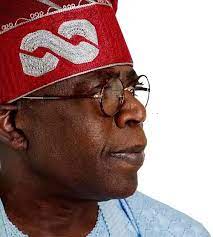
But the Tinubu government, rather than state the obvious, and tell us why we must endure a 500% increase in energy prices, falsely claim a “bold step” removal of a mythical petroleum subsidy.
The Nigerian situation is worsened by the persistence of successive governments of the country to continue with the deceitful neoliberal IMF/World Bank tutored policies – whose ultimate aims are to create economic dependencies; by destroying local manufacturing and food production.
This is the main motive behind the relentless pressures by the IMF and World Bank on Nigerian governments to concentrate efforts and resources on, what they say, are our areas of comparative advantage – non-value added cash crop farming (cocoa, cotton, rubber) , and un-beneficiated mining of minerals. This deliberate misguidance, which is an open pathway to the deindustrialization of the economy, is what has created the country’s dependency on the ruinous importation of finished goods and foodstuff; rice, wheat, corn etc. This has reached such extends that we are now at an increasingly desperate situation when we depend on importation for nearly everything, even to feed ourselves. So of course, we have to suffer disproportionally, in the circumstance of the unprecedented supply chains disruption and price increases.
In any case, it has always being the interest of the West, via the instruments of the IMF and the World Bank, to goad us into such dependencies. This is because, first, the survival of their economies depends on a constant supply of cheap, underpriced raw materials from our lands, and secondly, by absorbing their excess, over-priced productions, we serve as a ready market for their finished goods. These two factors lie at the heart of the financial colonialism, or what is termed neo-colonialism; which is seen in the relentless pursuit by the capitalist West, especially, US, France, and Britain, to dominate and control our, and every other, African economy.
Pertaining to the second point, the fact is that every hyperinflation , such as we are experiencing now, where prices have gone up by well over 500+% in the last year, has always have much to do with a steeped depreciations of the local currency , which itself is as a result of balance-of-payments deficits. When this happens, in an economy such as ours, that is desindustrialized , to the extends that we can no longer manufacture, but import everything, it is natural for the Naira’s exchange rate to sink to where it is now . Naturally, when a currency goes down, as the Naira has of late, the prices of imports go up. And, the price of food, and the cost of living, also increases accordingly. When this happens, the government then begins to scamper around for ways to keep the wheels of the economy turning. Usually they turn to the printing of more money and imposition of punitive taxation regimes.
In every case, the process leading to the inevitable hyperinflation is the same. It begins with years of deindustrialization, which is followed by unbridled importations of foodstuff and finished goods. This causes balance of payment deficits. Next the IMF and World Bank group step in with offers of high interest loans; whose repayments leads to sharp declines in the exchange rate. This is then followed by sharp increases in the prices of imported goods, and correspondingly, increases in domestic prices. Next, government resorts to more money printing to salvage the situation. Finally, the run-away hyperinflation sets in. However, the IMF and World Bank theorist, the Chicago school of economics types, argue against this, wrongly blaming every inflationary trend on government spending on social services and public infrastructures.
This deceitful claim as to the causes of the inflation is itself a deliberately calculated narrative, carefully formulated, to goad government to the freezing of social services and the privatization of the public domain.
Therefore, what we are witnessing in Nigeria now, since the beginning of President Tinubu’s” reforms”, is a calculated process designed to prepare the grounds for this inevitability. At some point, the Tinubu government will arrive at the famous “There Is No Alternative” (TINA) juncture. This is when they will announce that there is no other way to stabilize the country’s balance-of-payments crisis other than to sell off the public domain. They are edging ever closer to this juncture – now that we are seeing that all the monetary trickeries of financialization; lending rate increases, high yield bond issuance, money printing, more foreign loans et al, don’t work, and never will.
Eventually, the government will conclude that the only way to stabilize the run-away exchange rate is by massive privatization; selling off of the national electricity grid, public utilities, health, education and every other social service. This is what the IMF and World Bank demands from the very onset of this government. They lecture the government that the proven way to resolve the exchange rate crisis, and to stop the depreciation of the Naira, is to privatize and sell off everything public; roads, railways, water-ways, refineries, hospitals, schools, natural resources, everything. Since, according to them, “government has no business in business”; except of course, the business of tax collection. They lecture that as soon as government hands off public sector services, then a deluge of the much-hyped foreign investors, with portmanteaus of foreign money, to buy up our national assets and government services, will pour in. Afterwards, government will be able to stabilize its finances, stop the inflation, and manage to pay decent wages, so that workers can begin to survive.
But the problem with this logic is that once you privatize the public domain, the capitalist private owners are going to turn public infrastructure into monopolies and begin to extract monopoly rent. The prices for public services will be hiked-up and all the excess profits they make will be remitted to their second home countries; Dubai, Switzerland, Paris, the United States, and London. This is so because most of the so called” foreign investors” in Nigeria are actually Nigerians, mostly, the holders of dual passports. These are the 1% of corporatist and public office holders that have seized control of 99% of the economy, and are operating out of our state and government houses, National Assembly, banks, and trading houses, but are pretending to be foreigners. Hence, this on-coming privatization cum reforms will be yet another money making bazaar, which rather than assuage, will further worsen the economy, and step a heavier boot down the emaciated necks of Nigerians
Hence, one can confidently prognose that so long as this government persist with the IMF/World Bank system that puts the interest of our globalist elite ahead of the national interest, all of their so called “bold reforms”, will come to naught, and they will not be able to remedy the fundamental problems confronting the economy – because they are applying the wrong economic policies. They will not be able to resuscitate the moribund economy; they will not be able to resolve the cost of living crisis or reverse the hyperinflation or improve on the delivery of government services. Consequently, they should be prepared to face the angry reaction of Nigerians for the pains and sufferings they are inflicting on them on account of the anti-people neo-liberal policy dictations of the IMF/World Bank which they stubbornly support and effectuate.
Ultimately, we have to agree that all the endless reforms by successive Nigerian governments have come to a dead end, and accept that the time has come to end the financial colonialism: the take over and privatization of the public sector by corporatist and their proxies in government. That is to say, we have arrived at the time to begin to restore government, and governance, to its true purposes; to return it to serve its traditional roles of catering to the prosperity and wellbeing of the larger society, rather than serving as money making scams for corporatist financiers and their proxies . This restoration process will necessarily involve de-privatization of public assets and the sovereigntization of the economy – beginning with ensuring energy and food self-sufficiencies and freedom from the bondages of foreign debts.
The emerging multi-polar world order provides us the escape route from the system of neo-colonial subjugation; a decadent system, which from time immemorial, has being basis on financial exploitations – the parasitizing on others. The practice of endlessly taking from them, and forcing them to comply and fall in line, through coercion and military power projections, while giving nothing of value back in return.
It now behooves on progressive forces in our country, and also in Africa, to see that our salvation lies in choosing a fundamentally different socio-economic route, one which is directed at working for the good of the larger society, and not to serve the interest of a coterie of corporatist and their layers of proxies. This will be an orientation away from the junk economics of financial capitalism, and a move towards a development geared mixed economy model, aimed at pursuing the interests of the vast majority of the people. Much like the socio-economic approaches we see practiced in China, India and Russia, which contrast sharply with the U.S led Western system, which aims to control other countries by tricking them into debts, and the use of sanctions and wars, to enforce compliance to untenable geo-political formulations .
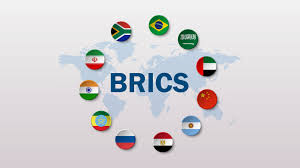
As we are seeing in the various BRICS initiatives, there is a viable alternative to financialized capitalism, a decadent system which centers on vampirism on the rest of the world, and the inordinate drive to control others through aggressive militarism. Rather than this, the multi-polar initiatives proposed by the BRICS union, which prioritize mutual gain, by facilitating the development of partners, rather than parasitizing on others, offers a superior alternative. This should be our pathway out of the economic and political subjugations we have been compelled to endure. It is the better and more compelling alternative, for a developing country like ours.