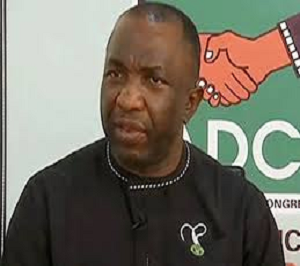
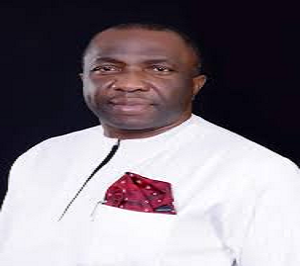
The ‘Agenda 2027’ African Democratic Congress (ADC) leadership discourse series continues, and today, the spotlight falls on Chief Raph Okey Nwosu, the founder and long-time chairman of the ADC, who coordinated the National Opposition Coalition Group (NOCG) and facilitated its adoption of the ADC.
Ralph Nwosu: Visionary and Pragmatic Founder of the ADC and Arrow-Head of Its 2027 Election Challenge
Personal Attributes, Social Engagement & Characteristics
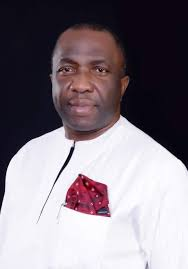
Chief Ralph Okey Nwosu is one of the most distinctive political figures to emerge from Nigeria’s post–Fourth Republic democratic experiment. Widely known as the founder and long-time national chairman of the African Democratic Congress (ADC), Nwosu occupies a unique place in Nigerian politics as a party builder, political organizer, and persistent advocate of democratic values outside the dominant political establishments. Known for his entrepreneurial discipline and unwavering commitment to institutional politics, Nwosu’s public persona is shaped less by flamboyance and more by consistency, ideological clarity, and a reputation for personal sacrifice in pursuit of political ideals.
Unlike many Nigerian politicians whose public lives are episodic, opportunistic, and oscillating with power shifts, Nwosu has maintained a steady engagement with party politics over decades, often at considerable personal cost. This endurance has earned him respect across ideological lines, even among critics who disagree with his methods or political calculations.
Individuals close to him describe him as thoughtful, resilient, and deeply invested in structural reform rather than fleeting political prominence. Nwosu has remained consistent in advocating for internal party democracy, transparent primaries, and active grassroots engagement. He is often described as disciplined, resilient, and methodical, projecting the bearing of a man deeply conscious of history and of the responsibility that political leadership imposes.
Chief Raph Nwosu is not an aloof political elite but a leader who routinely interacts with ward-level organizers, youth groups, women’s associations, and regional caucuses. This habit of constant engagement and presence among ordinary Nigerians; markets, civic forums, and community gatherings, is not symbolic but strategic: it has shaped his understanding of Nigeria’s political discontents, it informs his emphasis on internal party democracy, and it feeds into his belief that any credible challenge to Nigeria’s ruling parties must be rooted in citizen-driven mobilisation rather than patronage systems. His personal style, consisting of measured speech, calm persuasion, and a preference for negotiation over confrontation, has also defined his approach to leadership, even in moments of intense political crisis.
Political Vision, Ideological Stance & Leadership Engagement
At the core of Ralph Nwosu’s political identity is a clear ideological commitment to participatory democracy, institutional accountability, and the rejection of politics as a purely transactional enterprise. His political vision is foundationally anchored on the belief that Nigeria’s democratic crisis stems less from individual leadership failures and more from systemic political sclerosis. In his view, parties that lack internal democracy inevitably reproduce bad governance at the national level. Consequently, he has consistently emphasized transparent primaries, rule-based party administration, and ideological coherence. These principles have often placed him at odds with entrenched interests, but they also define his enduring appeal among reform-minded politicians and voters.
His decision to found the African Democratic Congress was itself a response to what he perceived as the moral and ideological exhaustion of Nigeria’s dominant parties. For him, the countries’ dominant parties, particularly the ruling All Progressives Congress (APC), have converged on a transactional model of politics that prioritises incumbency power over democratic accountability.
Thus, the ADC was conceived as an alternative political platform—one that would privilege ideas over godfatherism and organization over personality cults, a party that prizes internal democracy, ideological consistency, and citizen empowerment. Under his stewardship, the ADC rejected substantial inducements, allegedly including offers of ministerial appointments, to abandon its role in opposition coalition-building ahead of the 2027 elections. This reinforces his commitment to democratic values over short-term personal or partisan benefit.
Nwosu has openly criticized the APC’s record, framing the party’s governance as deficient in addressing pervasive economic hardship, insecurity, and democratic backsliding. He argues that the current administration’s policies have contributed to “despair, hunger, and economic stagnation,” conditions that necessitate political alternatives grounded in broad-based reform rather than elite consolidation
In leadership engagement, Nwosu has demonstrated an unusual willingness to subordinate personal ambition to institutional goals. Over the years, he has supported coalition-building efforts, opposition alliances, and even temporary transfers of party control where he believed such moves would strengthen democratic opposition. His widely publicized statements about choosing Nigeria over personal enrichment, and his rejection of inducements, have reinforced his image as a politician motivated by principle rather than immediate gain.
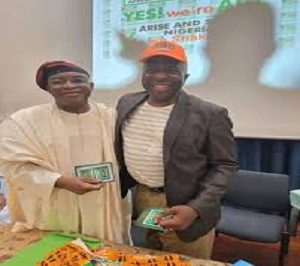
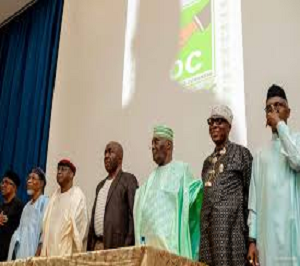
As Nigeria moves toward the 2027 general elections, Nwosu’s ideological stance has taken on renewed relevance. He positions the ADC not simply as another opposition party, but as a vehicle for systemic political reform capable of challenging the dominance of the ruling All Progressives Congress (APC). His leadership narrative emphasizes preparation, long-term strategy, and ideological clarity, contrasting these with what he describes as the APC’s reliance on incumbency power and elite bargains.
His tenure in national politics reflects a blend of ideological clarity and strategic patience: rather than chasing office, Nwosu has focused on building a political architecture capable of challenging the APC not just in elections but in Nigeria’s political imagination.
Influence & Networks
While his party has not historically matched the electoral machinery of the PDP and APC, and was often categorized as a smaller party relative to these parties, Ralph Nwosu’s influence extends well beyond formal party size. Over the years, he has carefully cultivated a dense network of relationships across Nigeria’s political, civic, and professional landscapes. These networks include former public office holders, technocrats, youth leaders, and reformist politicians disillusioned with mainstream parties.
Internationally, Nwosu has also engaged with democracy-support institutions and diaspora organizations, positioning the ADC as a party open to global best practices in governance and political organization. These transnational networks have contributed to the party’s policy orientation on electoral reform, youth participation, and technology-driven governance.
Crucially, Nwosu’s networks are not limited to elite circles. His sustained engagement with grassroots organizers across states has enabled the ADC to maintain a national footprint disproportionate to its electoral performance in some cycles. This balance between elite networking and grassroots mobilization is central to his strategy for repositioning the party ahead of 2027.

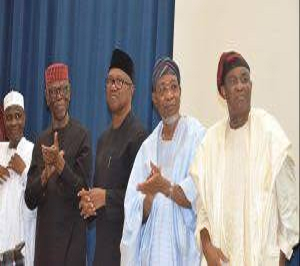
Chief Nwosu’s influence is particularly evident in opposition coordination efforts. He has been a consistent voice advocating for coalition politics as the only viable route to dislodging entrenched incumbency power in Nigeria. His role in negotiations with other opposition blocs, civil society organizations, and regional political movements underscores his strategic understanding of power aggregation in a fragmented polity.
Critically, Raph Nwosu played a central role in positioning the ADC as the core platform around which a broad opposition coalition, the National Opposition Coalition Group (NOCG), including figures like former Vice President Atiku Abubakar, Peter Obi, and other key opposition leaders, coalesced ahead of the 2027 elections. This alignment marked a strategic shift in Nigeria’s opposition politics: a deliberate attempt to present a unified front against the APC in the forthcoming elections
Nwosu’s efforts have significantly helped to elevate the ADC from a marginal party to becoming the flagship opposition party in Nigeria’s political configuration, a feat that reflects his organizational reach and strategic foresight.
Advocacy & Social Contributions
Beyond partisan politics, Ralph Nwosu has established himself as a vocal advocate for democratic norms, electoral integrity, press freedom, the rule of law, and civic responsibility. He has consistently spoken out against vote-buying, electoral manipulation, and the politicization and safeguarding of state institutions such as INEC, the judiciary, and the legislature, emphasizing that this is essential to prevent democratic erosion under a dominant ruling party. His public interventions, through press statements, interviews, and policy dialogues, often frame Nigeria’s democratic challenges as moral as well as institutional failures.
Nwosu’s advocacy extends to the protection of opposition rights within Nigeria’s political system. He has repeatedly raised concerns about the misuse of regulatory agencies and security institutions to weaken opposition parties, arguing that such practices undermine democratic competition and national stability. In his view, democracy is not merely about periodic elections but the continuous contestation of power through transparent, participatory, and accountable systems.
In social terms, his contributions are less about philanthropy in the conventional sense and more about institution-building. By investing time and resources in party structures, leadership training, and policy development, Nwosu has sought to create durable platforms for civic participation. He believes that sustainable social impact flows from strong institutions rather than episodic charity.
His consistent call for institutional resilience against executive overreach resonates with broader civic demands for a democratic reset.
Business & Economic Interests
Ralph Nwosu is a successful figure in private enterprise. His business background is often cited as the foundation for his administrative approach to politics. While not as publicly flamboyant as some politically connected entrepreneurs, he is widely regarded as financially independent – a status that has insulated him from the patronage pressures that often distort Nigerian politics. This autonomy has fortified his insistence on principled political engagement over opportunistic alignment and has allowed him to resist pressures that might compromise his ideological commitments.
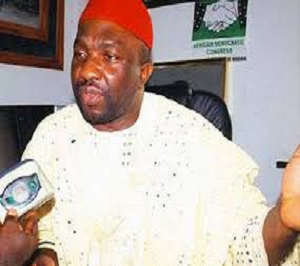
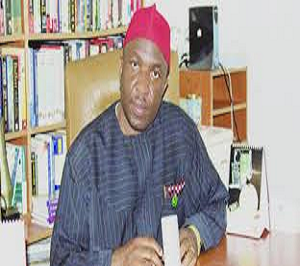
His understanding of economic policy is shaped by private-sector logic—efficiency, accountability, and long-term planning. In articulating the ADC’s economic vision, Nwosu frequently emphasizes small and medium-scale enterprise development, industrial diversification, and the creation of enabling environments for productive investment. He is critical of rent-seeking economic models, the over-centralization of fiscal power at the federal level, and he advocates for the decentralization of economic decision by moving it away from political elites.
These economic perspectives inform Nwosu and ADC’s critique of the APC’s economic record, particularly on issues of inflation, unemployment, and public debt. He frames economic reform as inseparable from political reform, arguing that corrupt political systems inevitably produce distorted economic outcomes. Such positions resonate with segments of the electorate frustrated by unemployment, inflation, and inequality under the APC-led government.
Personal & Social Life
Despite his public visibility, Ralph Nwosu maintains a relatively private personal life. He is known to value family, close friendships, and intellectual companionship. Those familiar with his social life describe him as reflective, disciplined, and deeply committed to reading, dialogue, and strategic thinking.
His social interactions often double as political engagements, with conversations revolving around Nigeria’s future, democratic reform, and leadership ethics. This blending of personal and political life reflects a worldview in which politics is not merely a career but a vocation tied to national destiny. His frequent dialogues with youth leaders, professional associations, and civic groups underscore his belief that personal leadership must be interconnected with broad-based national awakening. Raph Nwosu’s personal discipline and measured lifestyle also reinforce his public image as a leader motivated by ideas rather than ostentation. In a political culture often marked by conspicuous consumption, this restraint has become part of his moral capital.
Strategic Goals & Future Directions
As Nigeria approaches the 2027 elections, Ralph Nwosu’s strategic focus is firmly on repositioning the ADC as a credible national alternative. This involves three interrelated objectives: organizational consolidation, coalition building, and policy differentiation.
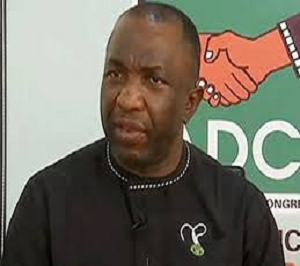
Organizationally, he has emphasized strengthening state and local party structures, improving internal governance, and expanding membership among youth and professionals. Coalition-wise, Nwosu continues to argue that opposition fragmentation is the greatest gift to incumbency power. His strategy envisions the ADC as either a central platform or a key pillar in a broader opposition alliance capable of challenging the APC.
In terms of policy, Nwosu seeks to differentiate the ADC through clear positions on restructuring, electoral reform, social justice, and economic inclusion. He frames the 2027 contest not merely as an electoral battle but as a referendum on Nigeria’s democratic future.
Thus, with the 2027 elections in sight, Nwosu’s strategic objectives are both immediate and long-term:
- Consolidating the Opposition: Nwosu was instrumental in laying the groundwork for a coalition that would present a unified challenge to the APC’s hold on power, rejecting fragmentation that has historically benefited incumbents.
- Institution-Building: He emphasises strengthening party structures at the ward and state level to ensure that the ADC (and its coalition partners) are rooted in grassroots mobilisation rather than top-down directives.
- Policy Distinctiveness: The coalition narrative under Nwosu’s influence frames the 2027 contest as a referendum against what he describes as the APC’s mismanagement of Nigeria’s socio-economic challenges.
- Democratic Renewal: Beyond 2027, his long-term vision is a political landscape where parties and leaders are accountable, ideologically coherent, and responsive to citizens’ needs rather than elite interests.
Prognosis and Final Words
Chief Ralph Okey Nwosu represents a strand of Nigerian political leadership that is often overshadowed but increasingly relevant: the institutionalist, the party builder, and the ideologue. His long journey with the African Democratic Congress illustrates both the arduous path of principled opposition in a political environment dominated by entrenched power structures and the enduring necessity of such efforts. His leadership of the ADC and his central role in forging a broad opposition coalition reflect a strategic recalibration of Nigeria’s democratic contestation ahead of 2027.
For many Nigerians disillusioned with the performance of the ruling APC, Nwosu’s ethos of unity, institutional strength, and democratic renewal presents an alternative narrative—one that prioritises governance reform over political expediency.
In a political environment hungry for credibility and coherence, Ralph Nwosu’s vision offers a reminder that democracy is not for sale, and that the future of Nigeria’s politics may yet belong to those willing to build patiently, think strategically, and lead with conviction.
Whether or not the ADC ultimately succeeds in unseating the APC in 2027, Nwosu’s role in shaping opposition politics is already significant. By insisting on ideas, institutions, and integrity, he has expanded the boundaries of political possibility and challenged Nigerians to imagine democracy beyond the familiar cycles of elite dominance. As the nation approaches a critical electoral crossroad, his influence in shaping opposition momentum and articulating a vision for democratic revival may well define the contours of Nigeria’s political future.
You can create wealth, live healthier, look better, and be more knowledgeable. You deserve this life! Do not hesitate to earn it. Visit our marketplace today.